
Trauma & PTSD
Remembering without reliving, so you can move forward with greater freedom and stability.

Clinical Expertise
These experiences have shaped me both professionally and personally. They have strengthened my commitment to trauma-informed care across all settings and have reinforced my belief in people’s resilience, even when it may feel out of reach. I remain committed to ongoing professional development and reflective practice to ensure that the care I provide is evidence-based, trauma-informed, and grounded in empathy.
My Professional Journey
I have worked across specialist NHS trauma services, military veteran services, looked-after children services, inpatient units (civilian and military), and crisis teams across Hampshire and other UK counties. This has given me extensive experience supporting people with complex and acute trauma-related difficulties at highly vulnerable points in their lives.
My work includes supporting individuals with PTSD, complex PTSD, dissociation, developmental trauma, and co-occurring difficulties such as depression, anxiety, and substance misuse. In inpatient and crisis settings, I have also supported people in acute distress, including those experiencing psychosis, managing high levels of risk, and emotional overwhelm.
These experiences have strengthened my commitment to trauma-informed care and reinforced my belief in people’s resilience. I remain dedicated to ongoing professional development and reflective practice to ensure my work is evidence- based, compassionate, and effective.
Treatment methods
My training includes both formal accredited programmes and ongoing supervision to ensure that my practice remains safe and up to date.

TF-CBT supports individuals in understanding how traumatic experiences influence thoughts, emotions, behaviours, and physical responses. It provides structured tools to process traumatic memories, reduce avoidance, and build coping skills.
EMDR is a well-established therapy that helps the brain reprocess distressing memories so they become less overwhelming and intrusive. Rather than requiring detailed verbal recounting, EMDR uses bilateral stimulation to support the brain’s natural healing processes, leading to reductions in emotional intensity and physiological reactivity.
CFT is particularly helpful where trauma has led to shame, self-criticism, or feelings of worthlessness. CFT focuses on calming the threat system and strengthening the soothing system, helping individuals develop a kinder and more supportive internal voice.
Trauma vs. PTSD
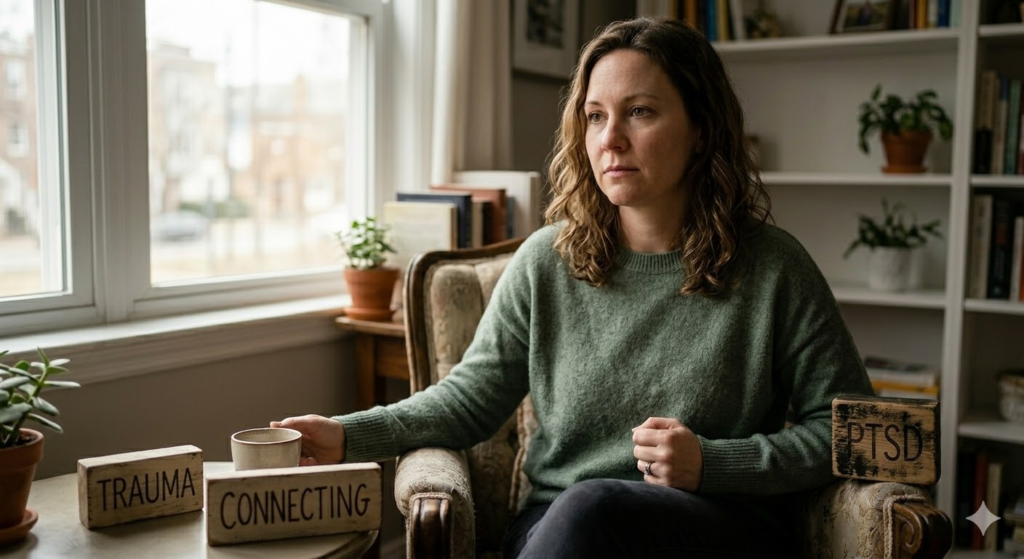
It is important to understand that not everyone who experiences trauma develops PTSD. Many people recover naturally over time whereas others may experience ongoing trauma-related difficulties that do not meet the full criteria for PTSD but are still deeply impactful. These experiences are equally valid and require care and treatment.

The Body's Response
Above all, whether or not a formal diagnosis applies, your experience matters. Trauma responses are the brain's normal way of coping with abnormal and/or overwhelming events which requires understanding, compassion, and effective support.
Path to Recovery
Recovery doesn’t mean forgetting what happened, but reducing its hold on your present. It means remembering without reliving, feeling without becoming overwhelmed, and responding rather than reacting.
My aim is not simply symptom reduction, but helping you rebuild safety, agency, and self-compassion to support your nervous system to process what was overwhelming so you can move forward with greater freedom and choice.


Clinical Background
Throughout my career, I have worked across specialist NHS trauma services, dedicated military veteran services, looked-after children services, inpatient units (both civilian and military), and crisis teams within both Hampshire and other counties in the UK. These roles have given me extensive experience supporting people facing complex and acute trauma-related difficulties, often at some of the most challenging and vulnerable points in their lives.
My approach:
In practice, I integrate these evidence-based approaches in a way that is tailored to each individual. Therapy is collaborative and paced around what feels manageable for you, with no pressure to share more than you’re ready to.