
Military & Veterans
Supporting you to work through combat trauma and other military attributable difficulties to enable you to lead a more meaningful, value-based life
Local Specialist Support
According to recent census data, Hampshire has one of the highest concentrations ofserving
military personnel and veterans in the UK.
Given this, I believe it is essential to provide
accessible, specialist support to those within the county who may be experiencing
difficulties, ensuring that members of the armed forces community can access the help they
need.

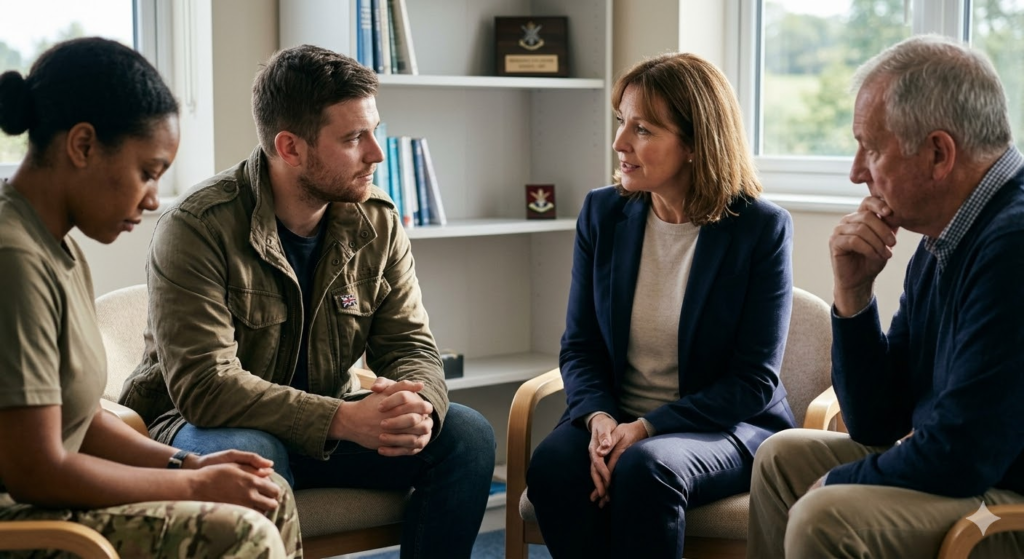
Clinical Military Experience
I have worked within specialist NHS Military Veteran services and NHS inpatient settings commissioned by the Ministry of Defence (MoD) across different counties, including Hampshire, supporting both veterans and actively serving personnel across the British Armed Forces, including the Army, Royal Navy, Royal Air Force, SAS, and SBS. I have worked with individuals experiencing combat-related trauma, moral injury, relationship difficulties, substance misuse, anger, psychosis, and the complex challenges of transitioning to civilian life. This has deepened my understanding of identity, loss, resilience, and the long-term impact of prolonged exposure to threat.
How therapy works with you:
A trauma-informed approach is particularly vital in military contexts. This involves using evidence-based therapies such as Trauma-Focused CBT (TF-CBT), Eye Movement Desensitisation Reprocessing therapy (EMDR) and Compassion-Focused Therapy (CFT). I typically adopt a phase-based approach, providing skills to stabilise and manage heightened emotions or anxiety before directly processing traumatic experiences.
Whilst working with veterans and military personnel, I believe it’s integral to incorporate an understanding of how military and operational culture has shaped an individual and their brain, recognising the impact of moral injury and survivors guilt, and appreciating how training can shape threat responses, hypervigilance, and emotional regulation. Effective therapy focuses not only on reducing symptoms, but also on rebuilding identity, restoring connection, and supporting a renewed sense of meaning and direction beyond service.
Within my practice, I prioritise a collaborative, safe, and compassionate approach, ensuring individuals maintain a sense of autonomy and control over their treatment. It’s important to note, therapy is always a shared process and is something done with you, not to you.
Seeking support is not a sign of weakness — it is a continuation of the same courage and commitment that military service requires. With the right support, recovery is entirely possible.

Personal dedication
Although I have not served personally, my passion and commitment to supporting military personnel is rooted in growing up within the Channel Islands, where the visible remnants of the Second World War and the German occupation remain part of everyday life. I also grew up hearing first-hand accounts from WWII veterans and family members who actively served and/or lived through the occupation. These experiences fostered a profound respect for those affected by war and a deep appreciation and awareness of the lasting psychological and human cost of conflict. They shaped both my empathy and my dedication to supporting those who have endured its impact.

The Toll of Service
Military and veteran mental health is shaped by experiences that are often intense,
high-pressure, and uniquely demanding. Individuals may face combat exposure, bullying,
threat to life, significant losses of life, moral injustices and prolonged separation from loved
ones, all while expecting to remain composed under extreme stress. Because of this,
individuals may develop and experience difficulties such as:
PTSD
Moral injury
Suvivors guilt
Depression
Anxiety
Sleep diffculties
Substance misuse
- Anger difficulties
- Relationship difficulties
- Problems adjusting to civilian life
In particular, transition out of the military can be particularly challenging. Loss of structure, identity, predictability, camaraderie, and purpose can leave veterans feeling isolated, misunderstood, or ashamed. Additionally, it can be common to struggle to talk about difficult experiences, especially within cultures that value resilience, self-reliance, and emotional control.
Culture and Research
My roles within specialist military services have given me a strong understanding of military culture, language, and operational pressures. Working closely with the MoD has also provided insight into military systems and the structural challenges personnel may encounter. In addition, I have dedicated my research to advancing understanding of military mental health and improving treatment approaches, of which I have published work in this area.

Schedule Your Free Consultation
Starting therapy can feel daunting, but you don't have to have everything figured out before reaching out. Book a free 15-minute consultation to ask questions, see if we're a good fit, and take that first step toward feeling better.